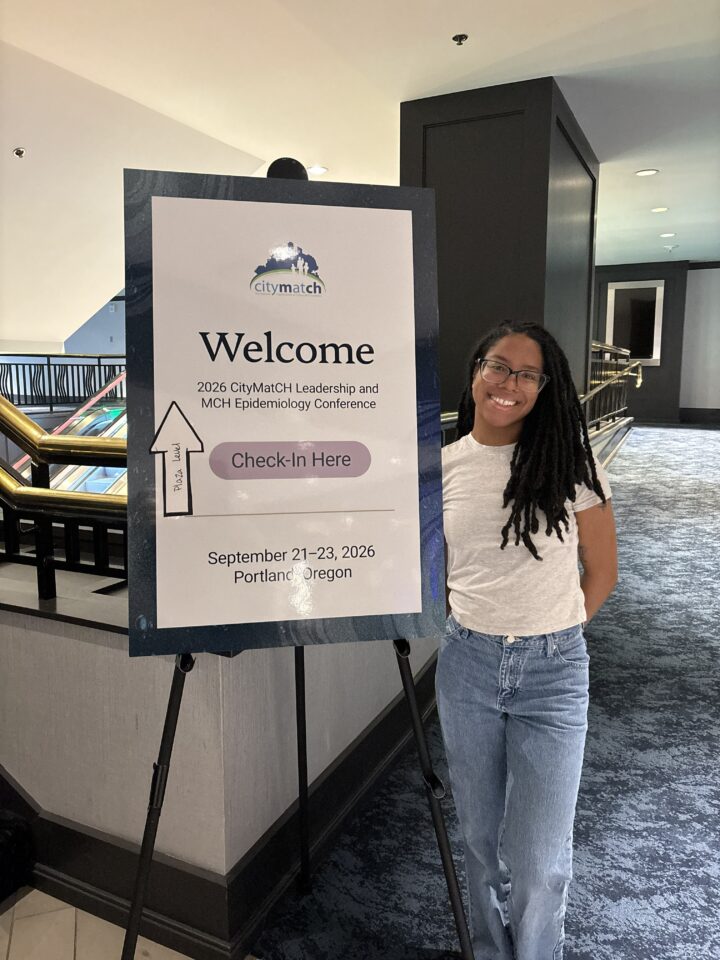
This past September, I attended the 2026 CityMatCH Conference in Portland, Oregon. This year’s conference theme was Resilience Systems for MCH Transformation, Grounded by Data, Committed to Community. The CityMatCH conference is a space for members of city and county health departments, community-based organizations, and academic researchers to present their research and programs in maternal and child health. The conference was an opportunity to share and learn about strategies for improving maternal and child health outcomes in specific states and counties. I also had the pleasure of networking with students, community-based organizations, and health departments and learned more about their work to support maternal child health populations.
At CityMatCH, I had the wonderful opportunity to present two research projects with my colleagues, Regan Moss and Claire Yinger. Regan, Claire, and I presented preliminary results from our research about co-developing an integrated matrescence and childbirth education curriculum for justice-impacted people experiencing pregnancy and childbirth while in prison. The aim of our project is to assess the feasibility, acceptability, and appropriateness of the curriculum we are developing to better support people navigating this life phase. Regan and I also presented research on increasing access to abortion care within carceral facilities through abortion doula care. The goal of this research is to not only understand how doulas conceptualize their work, but also the challenges and opportunities related to providing abortion care to folks in the carceral system. During this presentation, we also emphasized the importance of recognizing abortion doula care within birth work and its connection to the maternal child workforce.
Among the sessions I attended, the panel that had the largest impact on me was the session about indigenous sovereignty. We had the honor of learning from panelists, Janelle Palacios, Lannesse Baker, and Abra Patkotak about the history of indigenous groups in the United States, particularly regarding the impact of colonialism and racism on the health outcomes of indigenous people and contributions of the National Indian Health Board to the history of public health in the U.S. Our panelists also emphasized the need for indigenous people to have authority over ownership, collection, and use of maternal and child health data in order to improve health outcomes of indigenous communities. Learning about the needs and history of indigenous people in public health is an area I have been educated about the least. I want to continue learning about how I can uplift and contribute to the work that is being done to improve the health outcomes of indigenous people in our country. Thanks to CEMCH, attending CityMatCH was an experience of professional growth, learning, and connection.
Treasure Joiner, BSPH, is a second-year MPH student in the Social, Behavioral, Population Sciences department concentrating in Maternal and Child Health. She plans to graduate in May 2027. Her interests include sexual and reproductive health, birth equity, and violence prevention.